

Key takeaways
- Policy Language AI Blocks bring Kyber's policy language extraction, the same technology used in Kyber's AI Templates, into templates that claims teams manage and build themselves.
- A Policy Language AI Block retrieves and inserts exact policy language (like Agreement clauses or Perils Insured Against sections) directly into a letter. It does not summarize or paraphrase.
- Admins define the block's behavior with a plain instruction, such as "Insert the Agreement clause," placed directly inside the template.
- The rest of the template stays fixed. Required structure, statutory language, and formatting are unchanged. The block only fills the sections that must cite policy language precisely.
- For narrative sections that need explanation rather than citation, teams use a different block type, Freeform AI Blocks, inside the same template.
- The result: adjusters open a letter with the correct policy language already in place, shifting their role from searching and copying to reviewing and confirming.
Templates like Reservation of Rights, partial denials, and settlement letters are approved and repeatable. But inside them, there are sections that must reference policy language exactly.
Agreement clauses. Perils insured against. Applicable exclusions.
Kyber’s AI Templates already handle this automatically for complex letters Kyber manages end to end. They extract the right policy language and insert it as part of a fully AI-drafted letter.
But many claims teams also manage their own templates.
In legacy systems, that means one of two things. Either teams maintain dozens of near-duplicate templates with hardcoded policy language, or adjusters manually search policy documents and copy and paste the right clause into the letter.
Policy Language AI Blocks were built to bring Kyber’s policy language extraction into customer-managed templates.
Policy Language AI Blocks are part of Kyber’s broader AI Blocks framework, which allows claims teams to add targeted AI capabilities inside their existing templates rather than choosing between static or fully AI-managed letters.
What a Policy Language AI Block Is
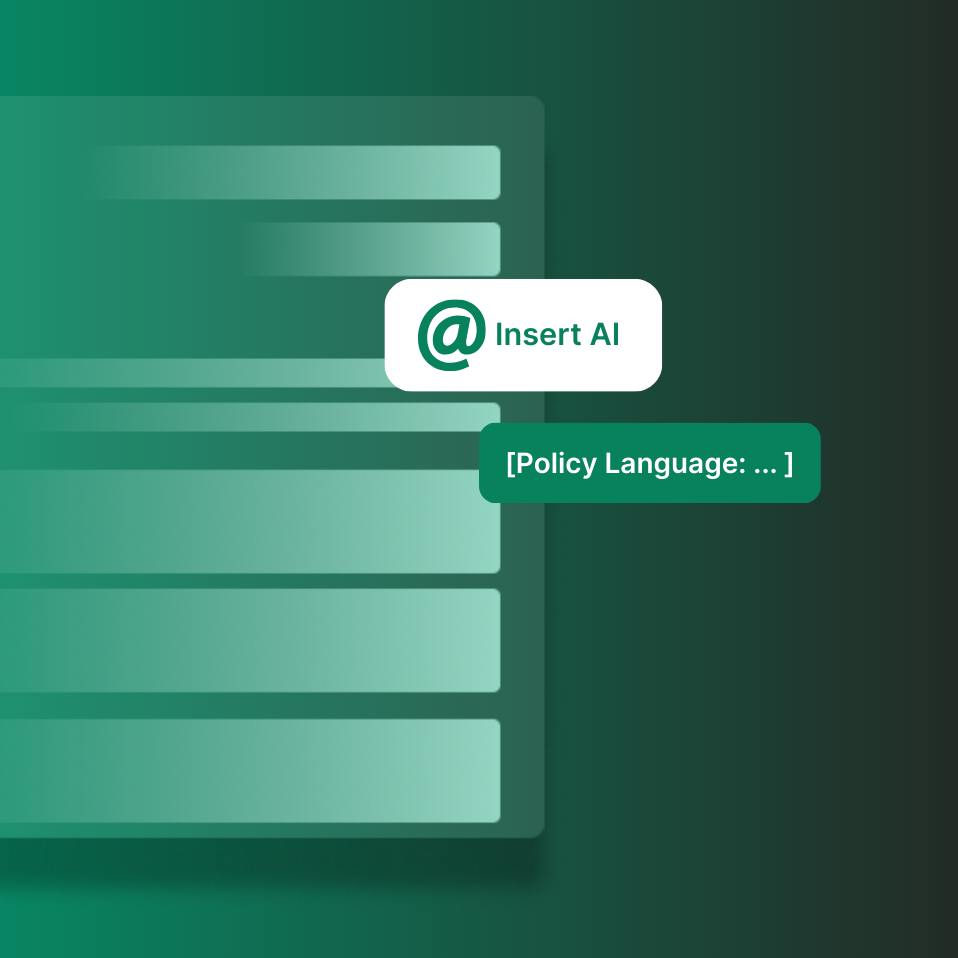
A Policy Language AI Block is a section inside a Kyber template that inserts exact policy language automatically.
It exposes the same policy language extraction capability used in Kyber’s AI Templates, but as a modular block that admins can place inside their own templates.
The behavior of the block is defined by an admin directly in the template, using instructions such as:
- “Insert the Agreement clause.”
- “Cite the Perils Insured Against section.”
- “Include the applicable exclusion.”
The block does not summarize or paraphrase. It retrieves and places the exact language from the policy document and formats it correctly inside the letter.
Why This Matters for Adjusters
The goal is to produce a more complete draft, earlier.
When teams manage their own templates, policy language has historically in legacy systems been handled by copying and pasting. Adjusters either referenced separate documents or relied on static template variants to include the right clauses.
Policy Language AI Blocks move that work back into the template itself.
Adjusters open a letter that already includes the correct policy language in the right place. Their role shifts to review and confirmation, not hunting for clauses or stitching language together.
That makes drafting faster, reviews cleaner, and letters more consistent without changing how adjusters work.
How It Fits Inside Existing Templates
Policy Language AI Blocks do not replace templates like Reservation of Rights letters. Those templates stay intact.
Required structure, statutory language, and formatting remain fixed. Policy Language AI Blocks simply fill in the sections that must reference policy language precisely.
For narrative sections that require explanation rather than citation, teams use Freeform AI Blocks to generate claim-specific summaries inside the same template.
The Practical Outcome
Policy Language AI Blocks help claims teams deliver more complete drafts, faster.
Adjusters spend less time searching and copying. Letters are more consistent earlier in the process. Policy citations become a built-in part of the draft instead of a manual step.
It is a small shift in how templates are built, but it unlocks Kyber’s AI inside templates teams already manage themselves.
FAQs
What is a Policy Language AI Block?
A Policy Language AI Block is a section inside a Kyber template that automatically inserts exact policy language, like an Agreement clause or an applicable exclusion, based on an instruction an admin sets in the template.
Does a Policy Language AI Block summarize or rewrite policy language?
No. It retrieves and places the exact language from the policy document, formatted correctly inside the letter, rather than summarizing or paraphrasing it.
How is a Policy Language AI Block different from Kyber's AI Templates?
AI Templates handle policy language extraction automatically as part of a fully AI-drafted letter that Kyber manages end to end. Policy Language AI Blocks bring that same extraction capability into templates that claims teams build and manage themselves.
Do Policy Language AI Blocks replace existing templates like Reservation of Rights letters?
No. The template's required structure, statutory language, and formatting stay intact. Policy Language AI Blocks only fill the specific sections that must reference policy language exactly.
What's the difference between Policy Language AI Blocks and Freeform AI Blocks?
Policy Language AI Blocks handle sections that require exact policy citations. Freeform AI Blocks handle narrative sections that need claim-specific explanation rather than direct citation. Both can be used inside the same template.
.png)



.png)
