Curious how much Kyber could save your team?
Calculate your ROI
Freeform AI Blocks: Pre-populating the Narrative
Product Updates

Freeform AI Blocks: Pre-populating the Narrative

Even the most structured claims templates have gaps. Freeform AI Blocks ensure **Freeform** never makes it into another letter.

Templates like Reservation of Rights, partial denials, and status letters are approved and repeatable. But inside them, there are sections that have always been left open.

These paragraphs exist because claims are not identical. Certain explanations need to reflect what actually happened in that specific claim.

In legacy systems, those sections are left blank. Adjusters are expected to fill them in manually before sending the letter.

Freeform AI Blocks were built to change that.

What a Freeform AI Block Is

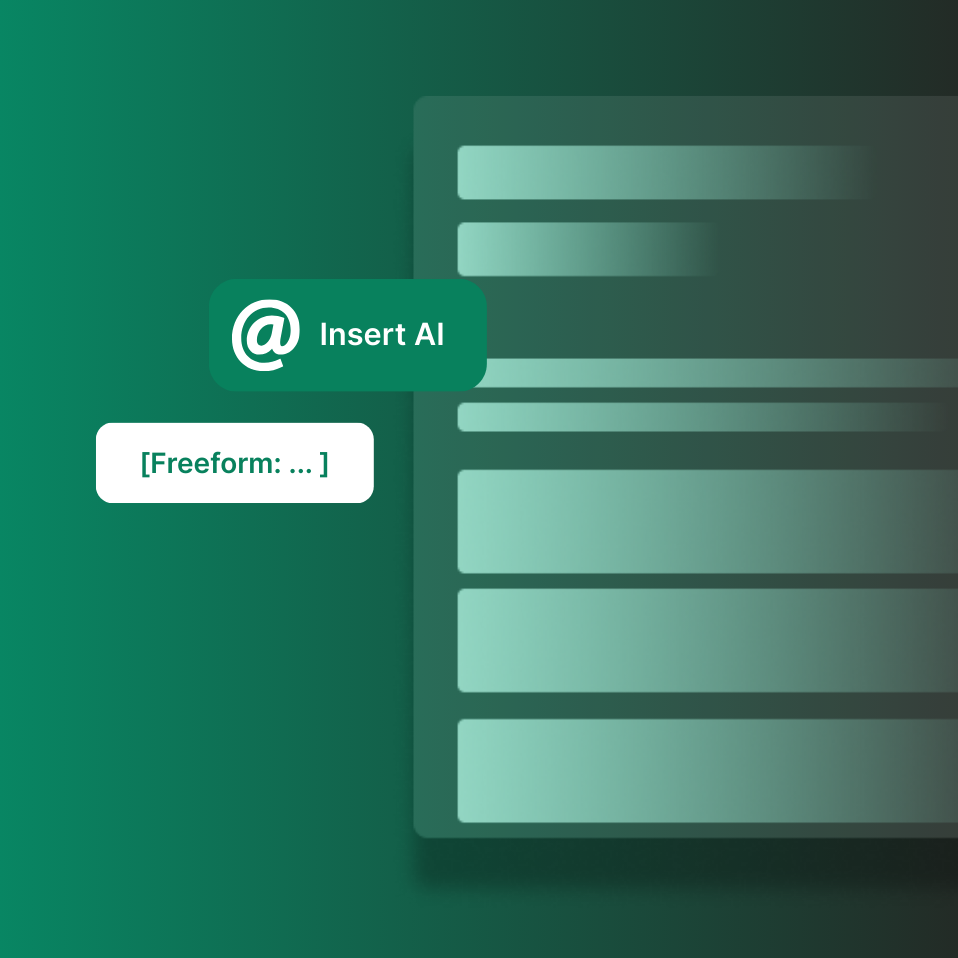
A Freeform AI Block is a narrative section inside a Kyber template that generates text automatically instead of starting empty.

It replaces a traditional freeform text field with AI-generated content based on structured claim inputs, most commonly a summary of the claim system notes and the coverage context provided.

The block is guided by a simple instruction written by an admin directly into the template, such as:

  • “Summarize the claim notes.”
  • “Summarize the claim notes and explain the decision outcome.”

The result is a consistent and personalized snippet of text that delivers the desired outcome that an adjuster once would have to manually write.

Why This Matters for Adjusters

The goal is not to remove human judgment. It is to start from a more complete draft.

Instead of opening a template with empty paragraphs, adjusters see a draft that already reflects the facts of the claim. They can review it, adjust if needed, and move on.

This reduces writing time and cognitive load, especially on complex letters where narrative is required but repetitive.

How This Fits Into AI Blocks

Freeform AI Blocks are one example of Kyber’s AI Block template features.

AI Blocks were introduced to sit between fully static templates and fully AI-generated letters. They allow teams to keep their existing templates and add AI only where more flexibility is needed.

Freeform AI Blocks apply that idea to narrative sections that have always required manual writing. Other AI Blocks handle tasks like policy language extraction or building tables from estimates.

Together, AI Blocks let claims teams assemble smarter templates by combining static content, structured data, and targeted AI reasoning, all within a single document and without changing how templates are approved or used.

How It Fits Inside Existing Templates

Required clauses, policy citations, and statutory language remain fixed. Freeform AI Blocks simply fill in the narrative sections that have always required manual writing.

Teams can add narrative without multiplying templates or asking adjusters to start from scratch.

The Practical Outcome

Freeform AI Blocks help claims teams deliver more complete drafts, faster.

Adjusters spend less time writing and more time reviewing. Letters are clearer earlier in the process. Narrative becomes a first-class part of the draft instead of an afterthought.

It is a small change in how templates work, but it removes a persistent sources of friction in claims correspondence.

Contents

No H2 Found

Thank you for subscribing!
From now on you will receive our monthly newsletter to your inbox.
Oops! Something went wrong while submitting the form.

Download Now

Thank you! Your submission has been received!
Oops! Something went wrong while submitting the form.
Free Whitepaper

Freeform AI Blocks: Pre-populating the Narrative

Templates like Reservation of Rights, partial denials, and status letters are approved and repeatable. But inside them, there are sections that have always been left open.

These paragraphs exist because claims are not identical. Certain explanations need to reflect what actually happened in that specific claim.

In legacy systems, those sections are left blank. Adjusters are expected to fill them in manually before sending the letter.

Freeform AI Blocks were built to change that.

What a Freeform AI Block Is

A Freeform AI Block is a narrative section inside a Kyber template that generates text automatically instead of starting empty.

It replaces a traditional freeform text field with AI-generated content based on structured claim inputs, most commonly a summary of the claim system notes and the coverage context provided.

The block is guided by a simple instruction written by an admin directly into the template, such as:

  • “Summarize the claim notes.”
  • “Summarize the claim notes and explain the decision outcome.”

The result is a consistent and personalized snippet of text that delivers the desired outcome that an adjuster once would have to manually write.

Why This Matters for Adjusters

The goal is not to remove human judgment. It is to start from a more complete draft.

Instead of opening a template with empty paragraphs, adjusters see a draft that already reflects the facts of the claim. They can review it, adjust if needed, and move on.

This reduces writing time and cognitive load, especially on complex letters where narrative is required but repetitive.

How This Fits Into AI Blocks

Freeform AI Blocks are one example of Kyber’s AI Block template features.

AI Blocks were introduced to sit between fully static templates and fully AI-generated letters. They allow teams to keep their existing templates and add AI only where more flexibility is needed.

Freeform AI Blocks apply that idea to narrative sections that have always required manual writing. Other AI Blocks handle tasks like policy language extraction or building tables from estimates.

Together, AI Blocks let claims teams assemble smarter templates by combining static content, structured data, and targeted AI reasoning, all within a single document and without changing how templates are approved or used.

How It Fits Inside Existing Templates

Required clauses, policy citations, and statutory language remain fixed. Freeform AI Blocks simply fill in the narrative sections that have always required manual writing.

Teams can add narrative without multiplying templates or asking adjusters to start from scratch.

The Practical Outcome

Freeform AI Blocks help claims teams deliver more complete drafts, faster.

Adjusters spend less time writing and more time reviewing. Letters are clearer earlier in the process. Narrative becomes a first-class part of the draft instead of an afterthought.

It is a small change in how templates work, but it removes a persistent sources of friction in claims correspondence.

Showcasing if a notice is approved or pending or denied.

Ready to Modernize Your Claims Process?

We'd love to share more about how Kyber helps claims teams automate so adjusters can focus on policyholders, not admin.

Book Demo
Showcasing if a notice is approved or pending or denied.

Frequently Asked Questions

How is Kyber different from traditional CCMs?

Kyber isn’t just a template library. It uses AI to pull the right policy language, apply jurisdictional rules, and generate accurate notices automatically. Every draft includes a built-in audit trail for full compliance visibility. Unlike legacy CCMs, Kyber is also lightweight to implement and easy to maintain across your claims team.

How does Kyber ensure compliance?

Kyber applies pre-approved templates, inserts only validated policy language, and enforces jurisdictional requirements for every letter. All edits, approvals, and versions are tracked automatically. All your organization's documents are audit-ready by default.

Does Kyber integrate with my existing Claims System?

Yes. Kyber is customizable to your organization’s existing tech stack (including core systems) and processes

How much time does it take to implement Kyber?

Most teams are live within a quarter when integrating with an existing claims system. For new integrations or more complex environments, implementation typically takes up to four months with full support from our onboarding team.

How does Kyber protect my organization’s data?

Kyber supports on-premise and private cloud deployments, and meets SOC 2 Type II compliance standards. You can choose the architecture that aligns with your internal security protocols while maintaining full control over sensitive claims and policy data.