See how Kyber connects with Guidewire Claim Center
View Accelerator
Kyber’s Q3 2026 Update: Enterprise Features and Partnership Expansions

Kyber’s Q3 2026 Update: Enterprise Features and Partnership Expansions

Kyber’s Q3 2026 update highlights stronger enterprise capabilities, new carrier go-lives, deeper Guidewire connectivity, and continued progress into policy workflows.

Q3 focused on strengthening the platform and enterprise controls behind Kyber’s claims correspondence workflows.

Building on Q2’s focus on review, governance, and the humans in the loop, the quarter centered on extending those capabilities across live carrier processes: helping more teams automate correspondence, strengthening connections with core systems and delivery channels,and  building advanced administrative controls


Core Theme: Strengthening Enterprise Capabilities

For carriers, faster drafting is only one part of managing correspondence. Teams also need control over access and dependable systems as correspondence moves through daily operations.

That’s why Q3’s infrastructure and administrative work matters. Engineering updates and custom roles addressed the platform behind the experience, while new go-lives showed Kyber in use in carrier workflows. Q3 focused on continuing to build a stronger operating foundation that can scale with the complexity and demands of enterprise-scale operations.  

Major Product & Platform Updates

HIPAA Compliance

Kyber achieved HIPAA compliance in Q3, marking an important milestone in supporting larger enterprises with more complex security, privacy, and compliance requirements.

The milestone strengthens the security and compliance foundation behind Kyber as carriers automate more of the correspondence lifecycle. It also expands the range of workflows Kyber can support while maintaining the controls, governance, and data-handling standards required by enterprise insurance organizations.

Custom Roles

Custom Roles became generally available this quarter, giving carriers more control over how different users access and interact with Kyber. Teams can define permissions around who can create, edit, review, approve, and manage correspondence based on role and responsibility.

Review Agents

Review Agents moved into broader beta availability across Kyber partners in Q3. Built on top of Kyber’s existing review processes, Review Agents are designed to pre-review correspondence and surface issues before documents reach a human reviewer.

Platform Infrastructure & Reliability

Kyber’s new policy form builder is being designed to give carriers a central place to manage forms, endorsements, underwriting manuals, and related policy content, alongside tools for traceability, system syncing, and internal workflows.

Guidewire PolicyCenter Accelerator

Kyber is also extending its Guidewire integration beyond ClaimCenter. We’re developing a new PolicyCenter accelerator that will connect policy data and workflows with Kyber, supporting a more direct link between policy information and correspondence management.

Kyber’s new policy form builder is being designed to give carriers a central place to manage forms, endorsements, underwriting manuals, and related policy content, alongside tools for traceability, system syncing, and internal workflows.

Customer Growth & Adoption

Q3 brought continued progress across carrier implementations, adoption, and expansion, with more examples of how carriers are putting governed correspondence automation into practice.

Together, these examples show Kyber supporting carriers at different stages - from new implementations and expansion to measurable operational impact.

Partnerships & Ecosystem Expansion

For correspondence automation to work in practice, it has to connect cleanly with the systems carriers already use. In Q3, Kyber continued building around that requirement through its work with Guidewire across ClaimCenter and PolicyCenter. Kyber also published new joint content on turning claim data into clearer claimant communications, while continuing development around deeper core-system connectivity.

Together, these capabilities extend the correspondence workflow beyond document generation, connecting drafting and review with delivery and claim-file recordkeeping.

Market Engagement & Community

Q3 created more opportunities to spend time directly with claims, technology, operations, product, and compliance leaders across the industry.

We hosted Friends of Kyber gatherings in Boston and Columbus, bringing together peers for informal conversations outside of the traditional conference environment.

The team was also on the ground at NAMIC’s 131st Annual Convention in Denver,  and ITC Vegas 2026, which all created additional opportunities to hear directly from claims and technology leaders.
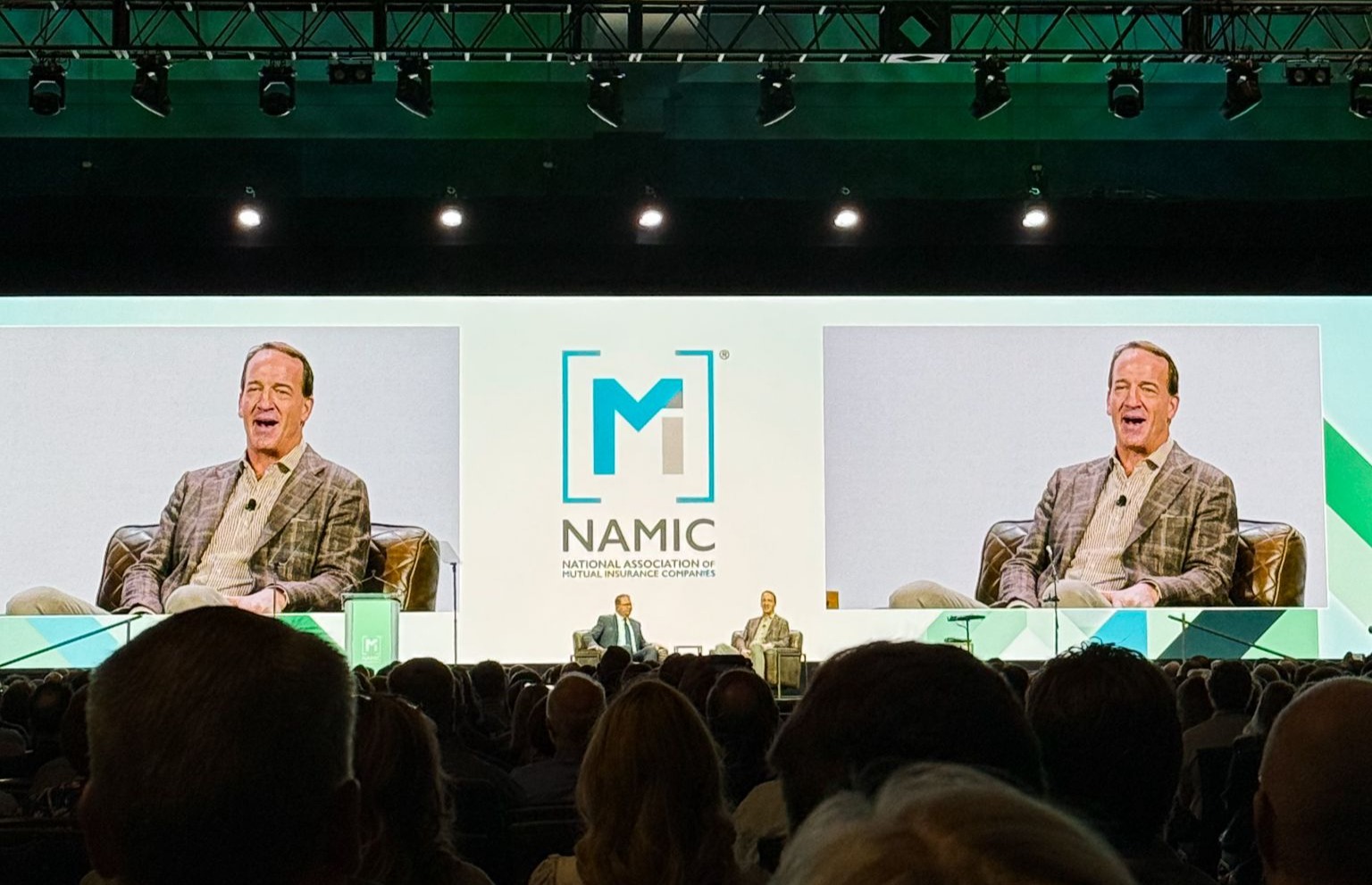
Across these conversations, several modernization priorities surfaced consistently: automating without sacrificing control, working effectively within existing core systems, driving adoption across claims organizations, and incorporating AI into day-to-day claims operations in practical ways.

Team & Culture

Q3 brought new energy and continued growth across the Kyber team, with Madison Cho joining marketing and McKenzie Warren as an Enterprise Account Executive.

Madison joined Kyber with experience helping build early-stage brands from the ground up, and is now leading work across content, community, events, and go-to-market storytelling. McKenzie brought a background in B2B SaaS and enterprise technology, with experience across regulated markets, and spent much of the quarter meeting carriers and industry peers across conferences and Friends of Kyber events.

Our first UX/UI design intern also wrapped up her time with us. Sriharika’s summer internship was celebrated with a rooftop BBQ and her final “culture report” on the team, a collection of her insights and unique learnings about each of the team members. 

Looking Ahead to Q4

Our focus in Q4 is centered on extending governed automation across more of the claims and policy workflow.

Key priorities include:

  • Review & Automation: Expanding how correspondence can move from drafting through review, approval, delivery, and logging with less manual intervention.
  • Enterprise Controls & Compliance: Strengthening permissions, governance, compliance, and administrative capabilities for larger organizations with more complex operating requirements.
  • Claude MCP: Expanding how Kyber can connect with AI assistants and agentic workflows through Claude MCP, while keeping access to claims data and correspondence capabilities structured and governed.
  • Policy Workflows: Launching the Guidewire PolicyCenter accelerator and beginning the rollout of Kyber’s policy form builder.
  • Ecosystem Expansion: Deepening integrations with core systems, delivery providers, and technology partners to reduce handoffs between systems.
  • Implementation Scale: Helping new carriers go live while supporting existing partners as they extend automation across more workflows.

Closing Perspective

Q3 marked another step in Kyber’s evolution from AI-assisted drafting toward more connected, governed automation across claims operations.

Across the quarter, those shifts showed up in practice through broader carrier adoption, stronger integrations and delivery capabilities, more mature enterprise controls, and continued progress into policy working processes.

In Q4, the focus remains on extending that foundation: reducing more of the manual work surrounding correspondence while giving carriers the control, visibility, and structure required to operate at scale.

Contents

Thank you for subscribing!
From now on you will receive our monthly newsletter to your inbox.
Oops! Something went wrong while submitting the form.
Showcasing if a notice is approved or pending or denied.

Ready to Modernize Your Claims Process?

We'd love to share more about how Kyber helps claims teams automate so adjusters can focus on policyholders, not admin.

Book Demo
Showcasing if a notice is approved or pending or denied.

Frequently Asked Questions

How is Kyber different from traditional CCMs?

Kyber isn’t just a template library. It uses AI to pull the right policy language, apply jurisdictional rules, and generate accurate notices automatically. Every draft includes a built-in audit trail for full compliance visibility. Unlike legacy CCMs, Kyber is also lightweight to implement and easy to maintain across your claims team.

How does Kyber ensure compliance?

Kyber applies pre-approved templates, inserts only validated policy language, and enforces jurisdictional requirements for every letter. All edits, approvals, and versions are tracked automatically. All your organization's documents are audit-ready by default.

Does Kyber integrate with my existing Claims System?

Yes. Kyber is customizable to your organization’s existing tech stack (including core systems) and processes

How much time does it take to implement Kyber?

Most teams are live within a quarter when integrating with an existing claims system. For new integrations or more complex environments, implementation typically takes up to four months with full support from our onboarding team.

How does Kyber protect my organization’s data?

Kyber supports on-premise and private cloud deployments, and meets SOC 2 Type II compliance standards. You can choose the architecture that aligns with your internal security protocols while maintaining full control over sensitive claims and policy data.

Q3 focused on strengthening the platform and enterprise controls behind Kyber’s claims correspondence workflows.

Building on Q2’s focus on review, governance, and the humans in the loop, the quarter centered on extending those capabilities across live carrier processes: helping more teams automate correspondence, strengthening connections with core systems and delivery channels,and  building advanced administrative controls


Core Theme: Strengthening Enterprise Capabilities

For carriers, faster drafting is only one part of managing correspondence. Teams also need control over access and dependable systems as correspondence moves through daily operations.

That’s why Q3’s infrastructure and administrative work matters. Engineering updates and custom roles addressed the platform behind the experience, while new go-lives showed Kyber in use in carrier workflows. Q3 focused on continuing to build a stronger operating foundation that can scale with the complexity and demands of enterprise-scale operations.  

Major Product & Platform Updates

HIPAA Compliance

Kyber achieved HIPAA compliance in Q3, marking an important milestone in supporting larger enterprises with more complex security, privacy, and compliance requirements.

The milestone strengthens the security and compliance foundation behind Kyber as carriers automate more of the correspondence lifecycle. It also expands the range of workflows Kyber can support while maintaining the controls, governance, and data-handling standards required by enterprise insurance organizations.

Custom Roles

Custom Roles became generally available this quarter, giving carriers more control over how different users access and interact with Kyber. Teams can define permissions around who can create, edit, review, approve, and manage correspondence based on role and responsibility.

Review Agents

Review Agents moved into broader beta availability across Kyber partners in Q3. Built on top of Kyber’s existing review processes, Review Agents are designed to pre-review correspondence and surface issues before documents reach a human reviewer.

Platform Infrastructure & Reliability

Kyber’s new policy form builder is being designed to give carriers a central place to manage forms, endorsements, underwriting manuals, and related policy content, alongside tools for traceability, system syncing, and internal workflows.

Guidewire PolicyCenter Accelerator

Kyber is also extending its Guidewire integration beyond ClaimCenter. We’re developing a new PolicyCenter accelerator that will connect policy data and workflows with Kyber, supporting a more direct link between policy information and correspondence management.

Kyber’s new policy form builder is being designed to give carriers a central place to manage forms, endorsements, underwriting manuals, and related policy content, alongside tools for traceability, system syncing, and internal workflows.

Customer Growth & Adoption

Q3 brought continued progress across carrier implementations, adoption, and expansion, with more examples of how carriers are putting governed correspondence automation into practice.

Together, these examples show Kyber supporting carriers at different stages - from new implementations and expansion to measurable operational impact.

Partnerships & Ecosystem Expansion

For correspondence automation to work in practice, it has to connect cleanly with the systems carriers already use. In Q3, Kyber continued building around that requirement through its work with Guidewire across ClaimCenter and PolicyCenter. Kyber also published new joint content on turning claim data into clearer claimant communications, while continuing development around deeper core-system connectivity.

Together, these capabilities extend the correspondence workflow beyond document generation, connecting drafting and review with delivery and claim-file recordkeeping.

Market Engagement & Community

Q3 created more opportunities to spend time directly with claims, technology, operations, product, and compliance leaders across the industry.

We hosted Friends of Kyber gatherings in Boston and Columbus, bringing together peers for informal conversations outside of the traditional conference environment.

The team was also on the ground at NAMIC’s 131st Annual Convention in Denver,  and ITC Vegas 2026, which all created additional opportunities to hear directly from claims and technology leaders.

Across these conversations, several modernization priorities surfaced consistently: automating without sacrificing control, working effectively within existing core systems, driving adoption across claims organizations, and incorporating AI into day-to-day claims operations in practical ways.

Team & Culture

Q3 brought new energy and continued growth across the Kyber team, with Madison Cho joining marketing and McKenzie Warren as an Enterprise Account Executive.

Madison joined Kyber with experience helping build early-stage brands from the ground up, and is now leading work across content, community, events, and go-to-market storytelling. McKenzie brought a background in B2B SaaS and enterprise technology, with experience across regulated markets, and spent much of the quarter meeting carriers and industry peers across conferences and Friends of Kyber events.

Our first UX/UI design intern also wrapped up her time with us. Sriharika’s summer internship was celebrated with a rooftop BBQ and her final “culture report” on the team, a collection of her insights and unique learnings about each of the team members. 

Looking Ahead to Q4

Our focus in Q4 is centered on extending governed automation across more of the claims and policy workflow.

Key priorities include:

  • Review & Automation: Expanding how correspondence can move from drafting through review, approval, delivery, and logging with less manual intervention.
  • Enterprise Controls & Compliance: Strengthening permissions, governance, compliance, and administrative capabilities for larger organizations with more complex operating requirements.
  • Claude MCP: Expanding how Kyber can connect with AI assistants and agentic workflows through Claude MCP, while keeping access to claims data and correspondence capabilities structured and governed.
  • Policy Workflows: Launching the Guidewire PolicyCenter accelerator and beginning the rollout of Kyber’s policy form builder.
  • Ecosystem Expansion: Deepening integrations with core systems, delivery providers, and technology partners to reduce handoffs between systems.
  • Implementation Scale: Helping new carriers go live while supporting existing partners as they extend automation across more workflows.

Closing Perspective

Q3 marked another step in Kyber’s evolution from AI-assisted drafting toward more connected, governed automation across claims operations.

Across the quarter, those shifts showed up in practice through broader carrier adoption, stronger integrations and delivery capabilities, more mature enterprise controls, and continued progress into policy working processes.

In Q4, the focus remains on extending that foundation: reducing more of the manual work surrounding correspondence while giving carriers the control, visibility, and structure required to operate at scale.