Aspire automates 44% of all correspondence with Kyber
Read More
Tracked Changes: A More Dynamic Kyber Editor for Claims Correspondence
Product Updates

Tracked Changes for Claims Correspondence

With Tracked Changes, Kyber helps claims teams manage the full review process inside the letter editor, making it easier to see what changed, who changed it, and why it matters

Claims correspondence is a component of more than routine communication. It is a part of the process for liability, coverage positions, compliance, and the claim record. As more people review and revise letters, teams need a clear way to see what changed, who changed it, and whether the final version reflects the right position.

Kyber’s new Tracked Changes feature gives claims teams a more controlled way to review correspondence before it goes out. Teams can suggest edits, review changes, leave comments, and approve final language without losing visibility into the drafting process.

“Every edit matters when it comes to correspondence. Our users often need to know exactly how a letter evolved, especially when it comes to legal or compliance review. Tracked Changes expand's Kyber's editor to give teams the transparency and flexibility they need for an even broader range of document use cases.”  Arvind Sontha, CEO of Kyber

Why tracked changes matter in claims

Claims letters often go through several rounds of review. Adjusters, managers, legal teams, brokers, and other stakeholders may all weigh in before correspondence is finalized. Without a clear review process, it is easy to lose track of edits or miss language that changes the meaning of a letter.

A small wording change can create risk. It may affect how coverage is communicated, how liability is framed, or whether a statement could be interpreted as a commitment. Tracked Changes helps teams catch those changes before the letter is sent.

It also creates a clearer record so teams can understand how the correspondence evolved and confirm that the right people reviewed the right language.

What Tracked Changes does

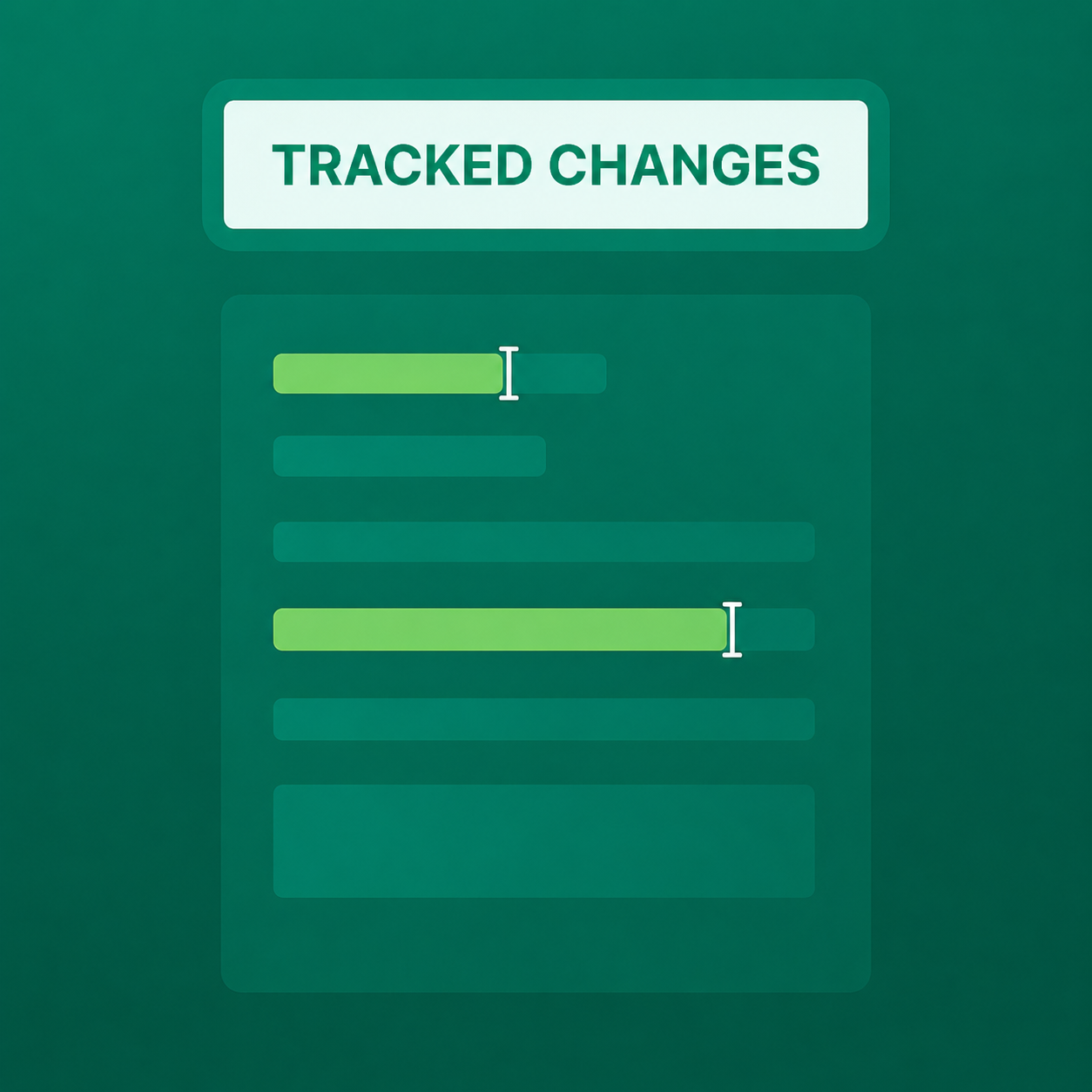
Tracked Changes adds suggestion and review capabilities directly into Kyber’s letter editor. Users can move between standard editing and suggestion mode, making it easier to propose and visualize changes without overwriting the draft.

Teams can:

  • See additions, deletions, replacements, and formatting changes
  • Review who made each change and when
  • Accept or reject suggested edits
  • Add comments and replies tied to specific language
  • Review deleted content in a dedicated sidebar
  • Preserve tracked edits and comments in version history

The result is a cleaner review process that supports both collaboration and accountability.

Business impact for claims teams

Tracked Changes helps claims organizations move faster while reducing risk.

Faster reviews: Managers and legal teams can focus on the language that changed instead of rereading full drafts from scratch.

Fewer errors: Sensitive edits are easier to spot, especially around coverage positions, denials, admissions, reservations of rights, and settlement language.

Stronger compliance: Teams have a clearer record of review activity, approvals, and changes made before correspondence is finalized.

Better collaboration: Comments and suggested edits stay connected to the relevant language, reducing back-and-forth across email, chat, and document versions.

More defensible claim files: The claim record shows how correspondence was reviewed, revised, and approved.

Built for the way claims teams work

Tracked Changes fits into Kyber’s existing letter editor, so teams do not need a separate document workflow or external redlining process. Adjusters can draft, reviewers can suggest changes, and managers can approve final language in one place.

The results for claims leaders is better oversight, cleaner collaboration, and a stronger audit trail for high-stakes correspondence.

See Tracked Changes in Kyber

Tracked Changes is now available in Kyber’s letter editor. Claims teams can use it to streamline reviews and keep a clearer record of every important edit.

Contents

No H2 Found

Thank you for subscribing!
From now on you will receive our monthly newsletter to your inbox.
Oops! Something went wrong while submitting the form.

Download Now

Thank you! Your submission has been received!
Oops! Something went wrong while submitting the form.
Free Whitepaper

Tracked Changes for Claims Correspondence

Claims correspondence is a component of more than routine communication. It is a part of the process for liability, coverage positions, compliance, and the claim record. As more people review and revise letters, teams need a clear way to see what changed, who changed it, and whether the final version reflects the right position.

Kyber’s new Tracked Changes feature gives claims teams a more controlled way to review correspondence before it goes out. Teams can suggest edits, review changes, leave comments, and approve final language without losing visibility into the drafting process.

“Every edit matters when it comes to correspondence. Our users often need to know exactly how a letter evolved, especially when it comes to legal or compliance review. Tracked Changes expand's Kyber's editor to give teams the transparency and flexibility they need for an even broader range of document use cases.”  Arvind Sontha, CEO of Kyber

Why tracked changes matter in claims

Claims letters often go through several rounds of review. Adjusters, managers, legal teams, brokers, and other stakeholders may all weigh in before correspondence is finalized. Without a clear review process, it is easy to lose track of edits or miss language that changes the meaning of a letter.

A small wording change can create risk. It may affect how coverage is communicated, how liability is framed, or whether a statement could be interpreted as a commitment. Tracked Changes helps teams catch those changes before the letter is sent.

It also creates a clearer record so teams can understand how the correspondence evolved and confirm that the right people reviewed the right language.

What Tracked Changes does

Tracked Changes adds suggestion and review capabilities directly into Kyber’s letter editor. Users can move between standard editing and suggestion mode, making it easier to propose and visualize changes without overwriting the draft.

Teams can:

  • See additions, deletions, replacements, and formatting changes
  • Review who made each change and when
  • Accept or reject suggested edits
  • Add comments and replies tied to specific language
  • Review deleted content in a dedicated sidebar
  • Preserve tracked edits and comments in version history

The result is a cleaner review process that supports both collaboration and accountability.

Business impact for claims teams

Tracked Changes helps claims organizations move faster while reducing risk.

Faster reviews: Managers and legal teams can focus on the language that changed instead of rereading full drafts from scratch.

Fewer errors: Sensitive edits are easier to spot, especially around coverage positions, denials, admissions, reservations of rights, and settlement language.

Stronger compliance: Teams have a clearer record of review activity, approvals, and changes made before correspondence is finalized.

Better collaboration: Comments and suggested edits stay connected to the relevant language, reducing back-and-forth across email, chat, and document versions.

More defensible claim files: The claim record shows how correspondence was reviewed, revised, and approved.

Built for the way claims teams work

Tracked Changes fits into Kyber’s existing letter editor, so teams do not need a separate document workflow or external redlining process. Adjusters can draft, reviewers can suggest changes, and managers can approve final language in one place.

The results for claims leaders is better oversight, cleaner collaboration, and a stronger audit trail for high-stakes correspondence.

See Tracked Changes in Kyber

Tracked Changes is now available in Kyber’s letter editor. Claims teams can use it to streamline reviews and keep a clearer record of every important edit.

Showcasing if a notice is approved or pending or denied.

Ready to Modernize Your Claims Process?

We'd love to share more about how Kyber helps claims teams automate so adjusters can focus on policyholders, not admin.

Book Demo
Showcasing if a notice is approved or pending or denied.

Frequently Asked Questions

How is Kyber different from traditional CCMs?

Kyber isn’t just a template library. It uses AI to pull the right policy language, apply jurisdictional rules, and generate accurate notices automatically. Every draft includes a built-in audit trail for full compliance visibility. Unlike legacy CCMs, Kyber is also lightweight to implement and easy to maintain across your claims team.

How does Kyber ensure compliance?

Kyber applies pre-approved templates, inserts only validated policy language, and enforces jurisdictional requirements for every letter. All edits, approvals, and versions are tracked automatically. All your organization's documents are audit-ready by default.

Does Kyber integrate with my existing Claims System?

Yes. Kyber is customizable to your organization’s existing tech stack (including core systems) and processes

How much time does it take to implement Kyber?

Most teams are live within a quarter when integrating with an existing claims system. For new integrations or more complex environments, implementation typically takes up to four months with full support from our onboarding team.

How does Kyber protect my organization’s data?

Kyber supports on-premise and private cloud deployments, and meets SOC 2 Type II compliance standards. You can choose the architecture that aligns with your internal security protocols while maintaining full control over sensitive claims and policy data.